Attorneys tend to be starched shirt conservative types, including the occasional liberal lawyer, most of whom maintain a civil practice as a plaintiffs' advocate, pitted against their more conservative counterparts (e.g. insurance defense practitioners), whereas criminal defense lawyers tend to be more live-and-let-live types, rubbing elbows as they do with some rather unsavory folks, be they rapists, murderers, or child molesters. I've practiced law in South Texas for almost 30 years, so I've had ample opportunity to mix with both types, but even the most open-minded masters of the penal code appear to adhere to mainstream religious beliefs no matter how "socially liberal" they may seem to be. Knowing this, I have hesitated to declare myself openly as a free-thinker or agnostic, much less an atheist.
On at least one occasion, I found myself denying my convictions as an atheist. It occurred one day while shopping at a local electronics store. I ran into an attorney who dropped out after several years of consumer advocacy (suing used car dealers, bill collection agencies, and insurance companies refusing to pay up when claims were filed), and I wondered what had become of him since he'd written a few columns for our now-disappearing daily paper. In the big box store where I ran into him, I asked what he'd been doing, and he said he was writing a book about religion and the law.
"And by the way," he added, "I hear you are an atheist."
I recall turning beet red. I stammered, hemmed and hawed. I searched for a "proper" explanation. I found myself saying that I was not "really" an atheist, "more like an agnostic." And then, in a moment of paranoia, I asked him where he'd come by his information. My home town, where I practice, is a small city of about 350 thousand persons, some 50 to 60 percent Catholic, about the same number as the Hispanic population, although it is demonstrably true that many Hispanics have abandoned the Church of Rome for evangelical congregations and the local equivalent of the "mega-churches." The county courthouse, however, is a beehive of rumor and gossip; I like to think of it as the smallest village in the state. When a judge sneezes, everyone learns she has a cold, and her enemies want to believe she's near death. (About half of our benches are occupied by women, and at one time the Fourth Court of Appeals in San Antonio was packed by nine female jurists.) The ladies have made up for lost time.
History has shown that once they express their heretical views, local atheists become notorious. Completely by accident, when I bought my home I learned that I was moving into the same block as "that guy who writes the letters to the editor -- that atheist!" He keeps to himself and is rumored to be in poor health, which of course allows the believers to claim "God" is punishing him for his disbelief. At the time I moved in, I considered myself a Buddhist, but only in the sense that I thought Buddhism a system of ethics, not a religion; after all, one does not have to believe in "God" to be a good Buddhist; one has only to meditate. Little did I know that as time went by I, too, would arrive at a point in my experience when I could no longer believe in a deity, not even Buddhism's equivalent of Christian saints, the bodhisattvas.
The attorney in the electronics store allowed as to how he'd learned of my free-thinking from another local lawyer, since retired, a person with whom I once had coffee and taquitos about twice a month and a dedicated Catholic. When he pulled in his shingle, Jack offered to send me some work representing priests and nuns in the local diocese who might be cating about for a new lawyer. I whimsically asked, "What do I have to do, convert?" It shocked me when he answered, "Yes." He knew of my heathenism, so he wasn't surprised when I responded that it wasn't worth it.
Then we had a break: he asked me to do some secretarial work for him, but as I have no secretary and spend an inordinate amount of time doing my own word processing, I replied that I simply did not have the time. He became irate and that put the quietus on our coffee klatches. Probably without ill-will, he apparently let on to at least one other attorney that I am an atheist.
And although I now wear that label with a certain sense of pride, I don't exactly like having everyone know about it. I began to wear the Scarlet Letter: "H" for hypocrite. That's right. I believe atheists have a moral obligation to let people know they do not believe; an obligation even to debate the issue with religious friends and acquaintances. But I kept my mouth shut. When a local evangelical group showed up at a city council meeting to protest a state grant of aid to Planned Parenthood, I considered writing a letter to the editor but could not bring myself to do it. (In fairness to myself, I did fire off a missive to the council person who led the vote against the funding, attaching to it a download concerning a think tank's findings indicating that for every dollar spent on birth control education four dollars are saved by taxpayers.)
Then came the April issue of the state bar's house organ, the Texas Bar Journal. Two separate letters to the editor of that periodical stated what were, to my mind, untenable beliefs. One was critical of the bar's decision to deny pension benefits to a judge who got "de-benched" for some kind of sexual derelictions. The letter writer was familiar to me: a liberal, he often writes letters to the journal in support of civil rights and other causes. He ended his rant by observing that the ex-jurist's "sins were not unforgiveable [sic]."
The other letter, from a Texas attorney living in New Mexico, decried the magazine's memorial issue devoted to Abraham Lincoln's career as a lawyer, and the writer chided the editors for leaving out any mention of Lincoln's "Christian upbringing" and how it influenced his decision-making. The writer then went into a diatribe against the doctrine of separation of church and state, which he called "a myth."
That did it! Reactionary that I am, I sat down and wrote a response, then faxed it off to the journal. I took issue with the first letter writer for intimating that there are some sins which can be forgiven and others that cannot. I said, "The fly in the ointment of the Christian concept of remission of sin is that it allows the sinner to go to church on Sunday and go to hell on Monday." In theory, no sin, no matter how heinous, is incapable of being foregiven. I also said that it was obvious even Christians themselves don't believe this: why else do they support capital punishment; almost all murderers repent in their last little speech before they're strapped to the gurney and administered heart-stopping chemicals.
But it was the second letter than really ticked me off. If the separation doctrine is a myth, why do we have a First Amendment to the Constitution. I pointed out that even Lincoln had his agnostic moments. For example, it is well known that when told the Union had "God on our side," he responded that their southern neighbors, who believed in slavery, also claimed God's blessings. One side of the Civil War had to be wrong about that, or else "God" was arbitrary and capricious.
Moreover, I said, the Founding Fathers were acutely aware of the long history of religious tyrany in Europe: it was partly because of this that they established our democratic republic. Some of them were deists at best and a few, including John Adams and Thomas Jefferson, were trenchant in their denunciation of religion -- and Christianity in particular.
Then I got to what really upset me about the writer's silly letter: the intimation that only religious folk are capable of being moral, ethical, and upright. I said, this was a particularly odious position to take in a day and age when more and more people, including myself, think of ourselves as free-thinkers.
Yes, I did not use the word "atheist," so I suppose some would say I have yet to come out as one. But if any of my fellow lawyers ask I will, finally, admit it. And anyone reading the letter can guess my true position on the matter. And although I must suspect many of my fellow lawyers and, worse, some of the judges in whose courts I regular appear, will conclude that I wear the big "A" rather than an "H," I am finally willing to let the chips fall where they may.
Monday, March 30, 2009

Wednesday, March 18, 2009
Nazarin in New Hampshire
Although it is generally thought inferior Buñuel, the Spanish filmmaker's brilliant Nazarin tells the woeful tale of a Mexican priest who goes about trying to bring comfort and hope to all he encounters on his peripatetic quest for social justice. As Leonard Maltin put it succinctly in his TV Movies and Video Guide: "[It is a] relentlessly grim drama of saintly priest [Francisco] Rabal and [the[ hypocritical peasants who shun him." Obviously, Maltin missed the point: the movie is not so much a drama as a subtle satire. Its point: mankind is not worth saving, and anyone, no matter how saintly, who tries to redeem him is hopelessly doomed to failure.
An American Nazarin has become the focus of much media attention, one Rev. David Pinckney of Chichester, New Hampshire. Pinckney, it seems, took in a convicted pedophile who murdered a 12-year-old boy from Nashua and served a prison sentence of 35 years prior to his release recently. Now 60, Guay would seem to have "paid his debt to society," but apparently there are some things you just can't be forgiven for. The residents of Chichester have threatened to burn down Rev. Pinckney's house. What would Jebus do?
Back in 1973, when Guay was convicted of the boy's murder, he told the court that he only intended to sexually molest the youth, and in fact the boy was clad only in socks and undershorts when found. Guay copped a plea, getting the 35 for second-degree murder. (He since escaped, in 1982, and was sent to a federal prison in California, where he stabbed a fellow inmate in 1991.) I mean, this guy is BAD!
Nazarin-like, Pinckney agreed to shelter Guay even though the pastor is married and has four children, one 13 (the age of Guay's victim). Pinckney sent a letter to the local paper saying Guay had served his time and was no longer a threat to anyone. The cleric cited Guay's "religious conversion" in 1993. Besides, he was allowed to stay at the Pinckney place for two months. Perhaps mindful of the astronomical rate of recidivism in pedophilia -- something the Pope Guy knows all about -- the citizenry thought the offer of living quarters was open two months too long.
Now, here are a couple of questions for Nazarin-Pinckney:
(1) If the same angels who visited Lot in Sodom reappeared and asked the Rev to find one good man in the city of Chichester -- one man who could forgive Guay of his sins -- does the pastor really think he could find one? (If not, would the all-good god destroy the entire city of Chichester and turn Pinckney's wife into a pillar of salt?)
(2) If God is all powerful and all good, why would he allow Guay to murder a 12-year-old boy? No, no, Rev, don't come up with the answer that "God" gave us freedom of will and it is our own choice to do right or wrong. If that is so, why couldn't the all powerful, all good god make us do the right thing all the time?
Pope: Condoms Won't Solve AIDS
The Poop, er Pope, is at it again. Touring Africa, he told the media condoms are not the answer to that continent's widespread AIDS epidemic. Arriving in the capital of Cameroon, Pope Guy said "You can't resolve it with the distribution of condoms. On the contrary, it increases the problem."
How? The news report observed "senior Vatican officials have advocated fidelity in marriage and abstinence from premarital sex as key weapons in the fight against AIDS." Uh-huh. Just like they have advocated letting a mother die because it is a "sin" to abort a fetus even if giving birth imperils her life.
Like Bristol Palin, the daughter of Sarah, I can only observe that "abstinence only" is unrealistic. Homo sapien males are hardwired for carousing -- how did the species survive otherwise? An erect penis knows no conscience. Telling a randy African to abstain from casual sex is like ordering a panda not to eat eucalyptus leaves. Such proscriptions violate the human will.
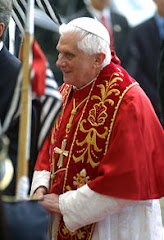
Once again, the Roman church has shown that it has its ostrich head stuck in the sand. Once again, it preaches misogyny and willful disregard of human nature. Those in its thrall do not worship the same prophet described in the scriptures, but a god of death: the death of the human spirit. Note that the pope guy doesn't say, "Some condom use might prevent AIDS." If a single human being were protected by prophylactics, a good god would not condemn them; in fact, a benevolent supreme being who created us in his image would welcome such scientific advancements as the latex condom.
The Church of Rome is the Church of Death. Religion poisons everything.
Monday, March 9, 2009
Disgusting Spectacle, Part II
M. D. Rodriguez's letter to the editor of the local Disappearing Daily (they've even cut the TV schedules in attempts to reduce costs due to low advertising revenues) has been answered by one Richard R. Lewinski, who, under the heading "Mercy for Celis," retorts:
"Ref. M.D. Rodriguez’s letter (“Bishop testifies,” Feb. 26) on Bishop Edmond Carmody and Msgr. Michael Herras testifying in Mr. Celis’ trial, (Feb. 26). What they testified to was the facts. Was Mr. Celis generous to the church? Are those the facts? Then the testimony was correct. I view Mr. Rodriguez’s letter as an attack on the Catholic Church. The purpose of the Catholic Church so stated by Jesus is for sinners. That is what the church exists for, to reconcile sinners to God through Jesus and building up the saints until they meet the Savior in the next life. It is the state that identifies someone as a criminal.
"There is a wrong concept that once one commits a great crime that person is a evil, undeserving of anything positive for the rest of their lives. This concept totally ignores the concept of people being rehabilitated, or to put it in church language, converted by the Grace of God. Yes, murderers and drug dealers can expect the same treatment from church leaders whether they are rich or poor, contribute to the church or not. All sinners can expect the offer of God’s mercy."
Oh, my, so many logical fallacies it is difficult to know where to begin.
First, it is easy to dismiss an opponent's argument by labeling him this or that; in this case, an anti-Catholic. Such epithets however hardly suffice as refutation of the points Mr. Rodriguez made in his earlier letter. Nor does Lewinski correctly characterize Bishop Carmody's testimony as "factual," at least not entirely. Yes, the bish noted the many good works Celis performed with his money donations to Church concerns. These were part of a calculated and, to anyone with any sense, cynically designed public relations campaign meant to lay the groundwork for his defense. But the prelate was called upon to answer the ultimate question of whether society would be benefitted by having Celis do prison time -- an opinion, not a fact.
Nor is Lewinski correct in claiming that "the purpose of the Catholic Church so stated by Jesus is for sinners." Jesus, if he indeed existed at all, and there is scant information to suggest as much save the vague and inconclusive writings of Josephus and the contradictory anachronisms of the canonical accounts, could not possibly have claimed that the purpose of the Roman church was "sinners." (In all fairness, Mr. Lewinski shows a singular skillessness when it comes to grammar and sytax, but that is the least of his faults.) As has been observed by more than one atheist, that champion misogynist, homophobe, and victim of self-contempt, Saul-Paul of Tarsus poisoned Christian doctrine by institutionalizing it complete with priesthood, thus putting the nail on its coffin, while Emperor Constantine lowered the catafalque.
As with all religious pronouncements, it is not simply difficult but impossible to refute Lewinski's claim that the church exists "to reconcile sinners to God through Jesus and building up the saints until they meet the Savior in the next life." No one, not Rodriguez, not Lewinski, and certainly not I, knows what may come; however, science, which subjects theory to rigorous testing and objective analysis, tells us what is certain: that our bodies simply decompose. The so-called human "soul" is a fabrication of fantasists; again, it cannot be proved or disproved, so there is little point in belaboring its existence.
As for the claim that "there is a wrong concept that once one commits a great crime that person is a evil [sic]," one wonders if Mr. Lewinski would regard Hitler as evil. What about Charles Manson? What about Atilla the Hun? Pol Pot? Khomeni? Idi Amin Dada? One supposes that slaughtering six million Jews, gypsies, Marxists, and homosexuals in the name of Aryan purity was not an evil. Even if you brought them to the confessional, what positive things might Hitler, Stalin, and Ivan the Terrible possibly do to win the forgiveness of man or "God"? Seems to me there are some things for which an apology simply won't do.
As for "rehabilitation" or "conversion" by the "Grace of God" in the context of the Carmody testimony in the Celis trial, one is reminded of the sordid history of indulgences, which Chris Hitch, writing in Free Inquiry, notes have been reinstituted by Pope Benedict. It's probably no more than a coincidence that the Pope guy's revival of the practice of granting plenary indulgences was announced long after Celis' PR stunts. Still, even if Carmody's appearance as a character witness in the Celis fiasco was not, strictly speaking, a part of an indulgence, the parallel is worth investigating.
As the New York Times has observed ("For Catholics, a Door to Absolution Is Reopened," 02-09-09), indulgences were the first complaint lodged by Luther when he posted his 95 Theses to the door of the Castle Church in Wittenberg lo these many 500 or so years ago. The Second Vatican Council of the 1960s did away with the practice -- but, obviously, only temporarily: what one pope taketh away, another can resinstate. (Personally, I've never forgiven them for relegating Saint Christoper to the status of a has-been; during my religious period, he was my favorite pietist.)
One of the Catholic leaders quoted by the Times, Bishop diMarzio of Brooklyn, when asked why the Church brought back indulgences, replied: "Because there is sin in the world." If logical fallacies were filberts, the Church would have the nut market monopolized. One must wonder, during the past 50 years, was the world any less sinful than now? Look at the events that have occurred in the intervening years. (Hint: they aren't limited to the jihadist attacks of 9/11.)
Indulgences, we're told, don't leave the sinner completely off the hook: even after confession, recitation of Holy Mary's and such, and, in Celis' case, payment of six figure tithes -- ecclesiastical money-laundering if you will -- the guilty party, as the Times put it, "still faces punishment after death in Purgatory." To borrow a line from the late George Carlin, God must be awfully arbitrary: the Protestant afterlife doesn't even contain a Purgatory. The Roman scheme of things even dictates that "there is a limit of one plenary indulgence per sinner per day." Does this mean I can get 1½ indulgences in 36 hours?
The Times piece quoted a Manhattan priest as saying that the reinstitution of indulgences has already produced noticeable results: "I had a number of people come in and say, 'Father, I haven't been to confession in 20 years, but this made me think it wasn't too late." One imagines this type of sinner going into the confessional and staying for days on end, necessitating priestly shifts in the box night and day. All humor aside, though, thinking "it [isn't] too late" raises another, perhaps critical point: where confession and divine forgiveness are concerned, it is literally never too late.
And that is precisely what I find the most obvious flaw in the Christer concept of sin in general (and Catholicism in particular): knowing that one can always be forgiven allows the sinner the luxury of thinking he can do wrong repeatedly and suffer no metaphysical consequences. Confession thus becomes almost a justification for evil. As the movie advertising for Martin Scorsese's film, Mean Streets, put it: "Go to Church on Sunday; Go to Hell on Monday." The Church responds to such criticism by saying that confession is not effective unless the sinner approaches the confessional corde saltem contrito, "at least with a contrite heart."
How are we to know that Celis has a "contrite heart," or whether, as is evident from the chronology of his charitable giving -- he started handing money around to the Church right after hiring the most prominent criminal defense lawyer in the city -- he's merely had the bejebus scared out of him by the thought of being butt fucked in a shower stall when he bends over to pick up the soap.
As I write, the local paper tells of million-dollar bonds being set by a judge for two men, ages 47 and 28, accused of the aggravated kidnapping and rape of two girls, aged 14 and 15. Assuming these defendants could come up with six-figure amounts to donate to Bishop Carmody's churches, I wonder if he would even give a nanosecond's thought to testifying in their behalf during the punishment phase of their trials. I kinda doubt it.
Thursday, February 26, 2009
Disgusting Spectacle in a Court of Law
A week ago, the City of Corpus Christi was treated to a disgusting spectacle when, during the punishment phase of a "bifurcated" criminal trial, the defense called as "character" witnesses two members of the Catholic clergy, a priest and a bishop. This is probably unprecedented locally. Evidence was adduced that through various means, including apparent (and illegal) fee-splitting, the defendant, Mauricio Celis, amassed millions. He is accused in related charges of money laundering: it's alleged he moved six-figure amounts south of the border. He accumulated so many dollars, in fact, that almost immediately after his release on bail for a plethora of felony counts, he began to spread money around quite liberally to various charities, including the priest's church. He even called press conferences to show local TV audiences just what a generous, altruistic man he can be.
Then came the first trial. He was convicted of 14 our of 22 counts of holding himself out as a lawyer without having a valid Texas license to practice law. After it had convincted Celis, the same jury decided his punishment. Character witnesses testified. Naturally, the prosecution, led by the able D.A., Carlos Valdez, painted a fairly devastating, gloomily negative portrait of the defendant: flashing a phoney sheriff's badge whenever he got into trouble; chasing a nude woman out of his house, down the street, and into a convenience store, and -- well, it went on and on. A woman he supposedly solicited through tearful testimony told how Celis had approached her to "sign her up." A loved one had died under negligent circumstances, and there was Celis, explaining to the woman that he didn't care if the deceased was a good person or a bad one; everyone needs a lawyer. The question of Celis having a valid law license aside, he certainly had no license in tact, etiquette, or common courtesy.
Bearing in mind that Corpus Christi is mostly Hispanic and overwhelmingly Catholic, it is interesting that the first letter to the editor concerning the trial was sent by one M. D. Rodriguez. It is so dead on (and so succinct) I quote in full:
Bishop testifies
"Testimony during the sentencing phase of the Mauricio Celis trial raises a number of questions involving the clergy and their participation in a criminal trial.
Bishop Edmund Carmody and Msgr. Mlchael Herras testified to Mr. Celis’ generosity to the church and their members at a trial that had just proven that it was done with ill-gotten gains. Does the leadership of the Catholic church not have a responsibility to turn away “dirty money,” or do they consider the funds “cleansed’ by the church?
"Can murderers and drug dealers expect the same treatment from the church leaders so long as they give a hefty portion of their “loot” to the church? Did the bishop hear the testimony of Mr. Celis chasing a naked woman to Circle K at four in the morning and that Mr. Celis spent more time at a local strip club than he spent at church?"
Now, I do not know who M. D. Rodriguez is. As the late comedian Lord Buckley was wont to say, "I don't know him from Frommer." (One supposes he was referencing a very popular author of travel guides during Buckley's years, the 50s and 60s.) In any case, Mr. Rodriguez hit the nail on the proverbial head. It says a lot about a religion that has such a skewed sense of right and wrong. Perhaps it should add Mammon to the Holy Trinity. One can imagine where that money is going: east.
As one local attorney put it to a blogger at http://eldefenzor.blogspot.com/2009/02/mauricio-celis-gets-probation-but-faces.html:
“I feel the Bishop’s motives were more selfish. It left a bitter taste in the courthouse that ‘the rich’ should be tried via a different standard if they engage in ‘humanitarian and generous gestures.’ I also presuppose that Celis had some of his attorney friends (sizeable contributor to the ‘collection basket’ that called the Bishop to do some trouble-shooting. The Bishop preached to a jury of mostly Catholic jury members – adding to the flurry of sudden outrage in many a circle of the Hispanic community in the area that Celis had become a target of convenience during the last major political campaign… both then-State Representative Juan Garcia and State Representative Abel Herrero were made targets by Republicans in that they were associated with Celis’ hefty contributions.”
Then came the first trial. He was convicted of 14 our of 22 counts of holding himself out as a lawyer without having a valid Texas license to practice law. After it had convincted Celis, the same jury decided his punishment. Character witnesses testified. Naturally, the prosecution, led by the able D.A., Carlos Valdez, painted a fairly devastating, gloomily negative portrait of the defendant: flashing a phoney sheriff's badge whenever he got into trouble; chasing a nude woman out of his house, down the street, and into a convenience store, and -- well, it went on and on. A woman he supposedly solicited through tearful testimony told how Celis had approached her to "sign her up." A loved one had died under negligent circumstances, and there was Celis, explaining to the woman that he didn't care if the deceased was a good person or a bad one; everyone needs a lawyer. The question of Celis having a valid law license aside, he certainly had no license in tact, etiquette, or common courtesy.
Bearing in mind that Corpus Christi is mostly Hispanic and overwhelmingly Catholic, it is interesting that the first letter to the editor concerning the trial was sent by one M. D. Rodriguez. It is so dead on (and so succinct) I quote in full:
Bishop testifies
"Testimony during the sentencing phase of the Mauricio Celis trial raises a number of questions involving the clergy and their participation in a criminal trial.
Bishop Edmund Carmody and Msgr. Mlchael Herras testified to Mr. Celis’ generosity to the church and their members at a trial that had just proven that it was done with ill-gotten gains. Does the leadership of the Catholic church not have a responsibility to turn away “dirty money,” or do they consider the funds “cleansed’ by the church?
"Can murderers and drug dealers expect the same treatment from the church leaders so long as they give a hefty portion of their “loot” to the church? Did the bishop hear the testimony of Mr. Celis chasing a naked woman to Circle K at four in the morning and that Mr. Celis spent more time at a local strip club than he spent at church?"
Now, I do not know who M. D. Rodriguez is. As the late comedian Lord Buckley was wont to say, "I don't know him from Frommer." (One supposes he was referencing a very popular author of travel guides during Buckley's years, the 50s and 60s.) In any case, Mr. Rodriguez hit the nail on the proverbial head. It says a lot about a religion that has such a skewed sense of right and wrong. Perhaps it should add Mammon to the Holy Trinity. One can imagine where that money is going: east.
As one local attorney put it to a blogger at
“I feel the Bishop’s motives were more selfish. It left a bitter taste in the courthouse that ‘the rich’ should be tried via a different standard if they engage in ‘humanitarian and generous gestures.’ I also presuppose that Celis had some of his attorney friends (sizeable contributor to the ‘collection basket’ that called the Bishop to do some trouble-shooting. The Bishop preached to a jury of mostly Catholic jury members – adding to the flurry of sudden outrage in many a circle of the Hispanic community in the area that Celis had become a target of convenience during the last major political campaign… both then-State Representative Juan Garcia and State Representative Abel Herrero were made targets by Republicans in that they were associated with Celis’ hefty contributions.”
Thursday, January 22, 2009
Yale Debate Yields Sad Results
The latest issue of the Secular Humanist Bulletin has a lead article by Ronald A. Lindsay, the editor of this, the members' newsletter of the Council on Secular Humanism. It's titled "Religion Has No Place in Government," which was a debate resolution at a Yale Political Union, a debate in which Lindsay participated. Sadly, the resolution was defeated, and by an almost two-to-one vote. With Lindsay, I say the results were "regrettable." Lindsay's article, however, was thought provoking to say the least.
For example, he asks rhetorically how useless it is to argue at all with a believer; the debate is on an uneven playing field:
That Jesus was simultaneously both divine and human seems on the face of it impossible -- even more than some being having the identity of both a rhinocerous and a worm -- but that does not prevent Christians from asserting this belief because at the end of the day they can always invoke 'faith.' 'Faith' means not having to supply reasons. You cannot argue with someone's faith....
As some of us provincials would say, 'nuff said. It occured to me, and I adopt Lindsay's logic and his position on the issue, that this is the swiftest, most cogent, most essential argument we have with theists: their case is not susceptible to proof. As an attorney, I believe that proof is accumulated and made manifest only by the introduction of facts. In a trial, for example, the facts must be such that credible witnesses are given greater weight than those whose testimony is of questionable veracity.
But at least there is an introduction of testimony. Factual assertions, representations and, at least when liars are on the stand, misrepresentations. But, at least something bordering on fact. No "God" fearing person can support his or her belief in "God" with anything vaguely resembling "fact." In a way, I am thankful to Lindsay. He has provided me with calm and patience with those Schiller once said were so ignorant even the Gods fought in vain.
Wednesday, January 21, 2009
Headline: "Jewish complaints excessive, Vatican says"
George Harrison (of Beatles fame) wrote an anti-war song on one of his solo albums whose lyrics contained a line that went something like, "[countries at war] are acting like big girls." Although spiritually a devotee of Krishna, George had a cynical, sarcastic streak -- astrology buffs might call it the Piscean in him -- and when he targeted someone for criticism, he did it obliquely but trenchantly, as when he warned of "greedy leaders/Who take you where you should not go." (George was prescient, since the last line obviously refers to George W. Bush and his Iraqi misadventure.) Sometimes religious groups act like big girls, too, as witness the current spat between Jews and the Catholic Church.
Our paper yesterday carried an AP story the copy desk decided to headline as "Jewish complaints excessive, Vatican says." It was a story originating in Vatican City and published in its daily paper, L'Osservatore Romano, a story about a spat between Jews and Christians. If I can put things in chronological order, it appears that an organization called the Assembly of Italian Rabbis pulled out of the Italian Catholic Church's annual celebration of Judaism. Why were the rabbis splitting? They were offended by the Vatican's restoration to the old Latin Mass, including a prayer for the conversion of Jews!
As a friend observed recently, it's difficult to imagine how anyone could claim membership in a religion that teaches that non-Christians are condemned to Hell just because they are non-Christians. This effectively eliminates 2/3rds of the world's peoples. But the Catholic-Jewish clergy's ongoing spat-then-kiss-and-make-up spectacle has deep roots and isn't likely ever to be resolved. It goes back to the blood libel of Jews being responsible for the crucifixion, an insanely illogical grudge when you consider that the Jewish people who condemned Jebus were merely fulfilling Christian prophecy! (For the same reason, I've never understood why they demonize Judas of Kerioth.)
In the new documentary film, The God Who Wasn't There, which is quite brilliant, I might add, we're treated to "borrowed" footage from the silly Mel Gibson film, The Passion of the Christ. Brian Flemming, the documentary director, shows us the blood-fest torturing of Reb Yeshua, more violent than your average spatter movie, but my complaint was that it was made cheaply at Cine Citta with inept actors; that, and the fact that Gibson seemed to equate having everything in Aramaic with English subtitles. But the film prompted pre-release controversy because some groups saw it as a son's homage to a dad: Gibson's father is a well-known anti-Semite.
How any religion that teaches the Messiah has come and will come again can get along with a religion that teaches that He hasn't come yet is a mystery to me. So, I suspect the on-again, off-again palling around by the Vatican and the rabbis has some reconciliation ahead of it (if you know what I mean). Obviously, both religions cannot be right.
Subscribe to:
Posts (Atom)